




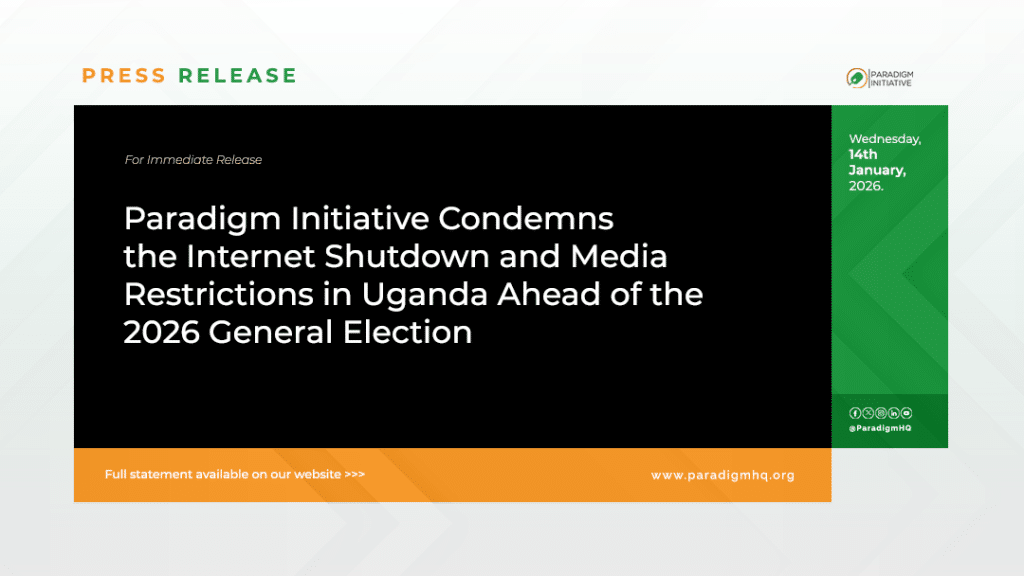
Paradigm Initiative (PIN) strongly condemns the internet shutdown implemented in Uganda ahead of Thursday’s general election, as well as the restrictions placed on media coverage of protests and demonstrations. These actions constitute serious violations of digital rights, media freedom, and democratic principles at a critical moment in the country’s electoral process.
Evidence indicates that internet access across Uganda has been disrupted, affecting social media platforms, messaging services, and online news outlets. This development comes despite earlier public assurances by the Uganda Communications Commission that the government did not intend to shut down the internet during the elections. The shutdown represents a troubling reversal of that commitment and raises serious concerns about transparency, accountability, and respect for fundamental rights.
Uganda has a well-documented history of internet shutdowns during elections, including during the 2016 and 2021 general elections. In 2021, a near-total internet blackout lasted several days, severely undermining freedom of expression, access to information, election observation, media reporting, and economic activity. Repeating these measures despite widespread national, regional, and international condemnation demonstrates a continued pattern of using digital restrictions as a tool of election management.
Paradigm Initiative further condemns directives preventing media houses from covering protests or demonstrations during this period. Such restrictions violate media freedom and the public’s right to receive information, and undermine the role of the press as a democratic watchdog. Suppressing coverage of protests fuels misinformation, heightens tension, and erodes public trust in the electoral process.
Article 29 of the Constitution of the Republic of Uganda guarantees the rights to freedom of expression, freedom of the press and other media, and access to information. Uganda is also a State Party to the International Covenant on Civil and Political Rights (ICCPR) and the African Charter on Human and Peoples’ Rights, which protect these rights under Articles 19 and 9, respectively. Any restriction on these rights must meet the strict tests of legality, necessity, proportionality, and legitimate aim. Blanket internet shutdowns and platform restrictions fail these tests and are incompatible with Uganda’s constitutional and international obligations.
At the international level, the United Nations Special Rapporteur on the promotion and protection of the right to freedom of opinion and expression, together with other UN Special Procedures mandate holders, has consistently affirmed that internet shutdowns are inherently disproportionate and can never be justified under international human rights law, including during elections, protests, or periods of political tension.
The African Commission on Human and Peoples’ Rights has recently issued a specific call urging the Government of Uganda to keep the internet on and to respect freedom of expression and media freedom during the current electoral period. This call builds on established African human rights standards, including Resolution 580 on Internet Shutdowns and Elections in Africa and Principle 38 of the Declaration of Principles on Freedom of Expression and Access to Information in Africa, which prohibits States from interfering with access to digital technologies.
Internet Service Providers and technology companies operating in Uganda also bear responsibility under the UN Guiding Principles on Business and Human Rights to respect human rights, ensure transparency, and avoid complicity in unlawful or disproportionate restrictions on connectivity.
Paradigm Initiative calls for:
- The immediate restoration of full internet access across Uganda and an end to all forms of digital disruption during and after the electoral period.
- The withdrawal of all directives restricting media coverage of protests, demonstrations, or political developments during elections.
- Accountability from Internet Service Providers, including the publication of transparency reports to users detailing government orders affecting internet access.