




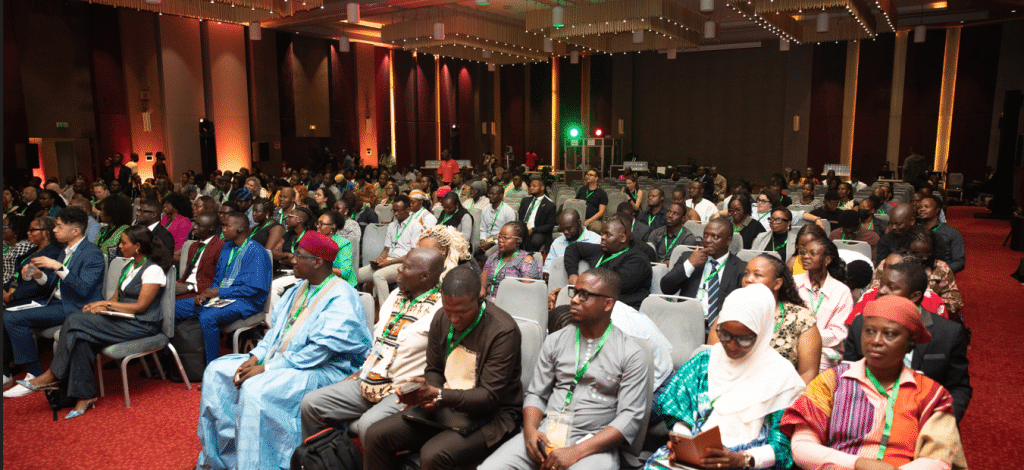
South Africa has retained its place as Africa’s leading digital rights-respecting country for the second time in a row. It is followed by Ghana, Namibia, Senegal, Egypt, Zambia, Kenya, Rwanda, Malawi, and Nigeria. This was revealed at the just-concluded Digital Rights and Inclusion Forum (DRIF26), in Abidjan, Côte d’Ivoire, where the 2025 Londa Report on the state of digital rights and inclusion in Africa was officially launched. The report by Paradigm Initiative, a pan-African non profit organisation offers a comprehensive, data-driven assessment of internet freedoms, policy environments, and emerging digital rights risks across the continent. It provides an annual benchmark of progress and setbacks in digital rights protection, drawing on extensive country-level research and stakeholder engagement.
A central feature of the report is the Digital Rights Score Index, which ranks African countries based on their performance across key indicators, including access to information, freedom of expression, privacy protections, and digital inclusion, among others. In this year’s edition, South Africa retained its position as the highest-ranked country, reflecting continued relative strength in its digital rights framework, while the broader index highlights both areas of improvement and persistent structural challenges across the region. The most improved countries in the ranking are Botswana and Egypt, which both improved by over nine places. This was in stark contrast to countries like Nigeria and Cameroon, which both dropped by five and ten places, respectively. On the other hand, Mozambique, the Democratic Republic of Congo, and Sudan all dropped in rank, placing them among the bottom five in the list.
The launch of the Londa Report at the three-day Forum was one of a series of strategic releases that highlighted the intersection between research, advocacy, and digital innovation within the African digital rights ecosystem. Among these was the introduction of Paradigm Initiative’s Digital Rights On-Demand Learning (DROL) platform, offering free courses in digital rights and inclusion to increase awareness, and the release of a research report titled Africa Facing Down: Disinformation, which provides factual assessments of disinformation and its impact on the information ecosystem in six African countries: Benin, Cameroon, Cote d’Ivoire, Ghana, Nigeria and Senegal. Amongst key findings are attacks on factually accurate information taking place within a package of narratives that puts a premium on appeals to emotions and identities, the use of falsehood by some online influencers and activists who serve as opinion leaders, as well as different involvements with disinformation linked to people’s age, gender, and rural/urban demographics.
DRIF26 also featured the premiere of Paradigm Initiative’s sixth short film, The Signal, which focuses on the perils of exclusion and the lack of internet access, and their impact, especially on vulnerable people in rural communities.
Speaking at the DRIF26 opening ceremony, ‘Gbenga Sesan, Paradigm Initiative’s Executive Director, noted that the Forum was an opportunity for introspection by all stakeholders striving to achieve an inclusive and resilient digital future. “A society is only as strong as how it treats its weakest members. Yet in the area of inclusion, we must acknowledge that many have been left behind. As a community and as a continent, we need to remain resilient. We must continuously assess where we are, because we too often assume progress without truly measuring it. Only through honest evaluation and evidence can we understand the gaps and, more importantly, take meaningful action to close them. That is the responsibility we carry forward from this Forum,” ‘Gbenga stated.
Still at the opening ceremony, Nnenna Nwakanma, Internet Governance specialist, spoke on the need to go past drafting frameworks to implementing them and adapting them to the lived realities of Africans. Bahaa El-Taweal, the Global Policy Lead on Google’s Human Rights Team, highlighted the main guiding principles in conducting human rights diligence and the need for countries to surmount obstacles to developing and sustaining digital public infrastructure.
Meseret Melat Fassil, Legal Officer, African Union (AU), reminded delegates of the Malabo Convention, which came into force in 2023, almost a decade after it was agreed upon. Highlighting the challenges faced in implementing the Convention’s statutes, she explained that this only underscores the need for access to technology and inclusion across the African continent.
DRIF26 featured 415 physical attendees, 112 sessions, and more than 1,000 engagements on the online event management platform over three days. Taken together, the launch of the Londa Report, the unveiling of the DROL platform, and the premiere of The Signal reflect a broader commitment within the digital rights community to move beyond analysis alone, toward building practical tools, narratives, and evidence bases that can inform policy, strengthen advocacy, and support a more open, secure, and inclusive digital future across Africa.
The 2027 edition of the Forum will take place in Nigeria from the 13th to the 15th of April, 2026.